
Katherine Hung
Spatial Design

bEYOND THE LABEL-
MAISON MARGIELA exhibition
FRAGMENTS OF FASHION, REIMAGINED
This exhibition explores how Maison Margiela’s philosophy of anonymity, deconstruction, and reinvention can be translated into spatial form.
Rooted in ideas of memory, craftsmanship, and identity, the exhibition challenges traditional notions of authorship in fashion and shifts focus from brand recognition to process and meaning.
Rather than presenting garments as finished objects, the project positions fashion as an evolving language shaped by transformation, experimentation, and personal interpretation.
Brand Ethos: Anonymity, Deconstruction, and Challenging Traditional Fashion Norms
Margiela’s work deconstructs and reconstructs garments using unconventional materials, revealing the process behind the design.
Through upcycling and its Artisanal line, the brand blends sustainability with fashion, art, and performance.


Birth of Maison Margiela (1988):
Founded by Belgian designer Martin Margiela in 1988, Maison Margiela emerged as a fashion house known for deconstructive design and anonymity. Margiela himself avoided the spotlight, never taking a bow at the end of his shows, allowing the brand’s avant-garde creations to speak for themselves.

Site Elevation
21_21 Design Sight Tokyo
Founded by fashion designer Issey Miyake. Designed by architect Tadao Ando, this museum is dedicated to design and creativity. Its commitment to exploring the boundaries of art and fashion would resonate with Maison Margiela’s experimental aesthetic, making it a perfect space for a fashion exhibition.
Located in Roppongi, a cultural hub in Tokyo, 21_21 Design Sight attracts an audience interested in design, fashion, and the arts. Aligns perfectly with Maison Margiela’s target demographic, those who appreciate conceptual fashion and avant-garde design. The venue’s audience resonates with Margiela’s themes of anonymity, deconstruction, and innovation.

Floor Plan:

Site Section:

House of Anonymity:
As guests enter, create a minimalist black entrance with no overt branding, just the iconic four stitches on the walls. The entrance should feel like stepping into a blank slate, reflecting Margiela’s ethos of anonymity.
The Logo:
A signature of anonymity and deconstruction. The four white stitches reject logos, shifting focus entirely to craftsmanship. By exposing the hidden construction of the garment, they embody the brand’s avant-garde, anti-establishment philosophy.

Entrance of the Exhibition
Touch and Feel Installation:

Touch and Feel Installation
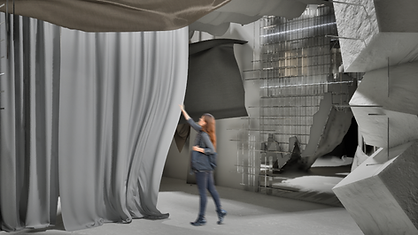
The Touch & Feel section emphasizes Margiela’s material-driven approach by inviting direct interaction with fabric scraps and reconstructed textiles. By engaging through touch, visitors experience the raw textures, weight, and imperfections of the materials, shifting focus from visual consumption to physical connection and reinforcing the importance of process, craft, and material honesty.
Deconstruction:
The Deconstruction section explores Margiela’s signature design language of dismantling and reassembling garments. Through fragmented forms, exposed seams, and shattered compositions, the space reveals what is typically hidden in fashion construction. This section reframes destruction as a creative act, challenging traditional ideals of perfection and redefining how garments are understood.
Reconnecting:
The Reconnecting section centers on reassembly as a symbol of transformation. Seams, buttons, and reconstructed joins reveal how fragments are brought together to form new meaning, emphasizing creation as an ongoing process of breaking, repairing, and redefining.
Deconstruction
Galliano Era: Theatrical Reinvention
Display pieces from John Galliano’s time at Margiela, focusing on his love for drama, storytelling, and the blend of historical references with modern silhouettes. Dresses with exaggerated Victorian-inspired corsets and futur- istic designs would be key highlights.
.png)

Galliano Era: 360 immersive Experience
Interactive Element: A multimedia projection of Galliano’s runway shows, creating a 360-degree immersive experience of sound and visuals. The Models are turned into giants, making people look at the details of the clothing more easily.
Artisanal Line: Craft Meets Couture
Highlight Margiela’s Artisanal collection with pieces made from recycled and upcycled materials. A rotating display of haute couture garments, some in deconstructed form to show the handcrafting process.the city.


Artisanal Line Display
Artisanal Line Wall Graphic


Tabi Experience Entrance
Tabi Customization:
The Tabi Customization area transforms an iconic Margiela object into a platform for personal expression. Through controlled, unpredictable paint application, each pair becomes a one-of-a-kind piece shaped by both human choice and machine intervention. This section reflects Margiela’s philosophy of individuality, authorship, and experimental craft.

Tabi Customizing Station
Runway-like Showcasing Spring '24:
Faceless mannequins dressed in iconic Margiela designs, reflecting the designer’s commitment to anonymity and the deeper realization of fashion.
Digital stations where visitors can create their faceless avatars in a Margiela-inspired wardrobe and project them onto the ceiling screen, emphasizing the brand’s individual


Physical Runway Model - Video Made with Touch Designer
Video Made with Touch Designer and Projected onto a Physical Model

Elevations:

Numbering System:
The Numbering System section concludes the exhibition by revealing Maison Margiela’s iconic use of numbers in place of traditional branding. Each number corresponds to a specific category, reinforcing the house’s commitment to anonymity and conceptual identity.
Positioned at the end, this moment acts as a quiet decoding allowing visitors to reflect on classification, authorship, and meaning only after experiencing the brand without labels.

Numbering Tag at End of Exhibition
exhibition walkthrough
This exhibition is about self-expression, innovation, and redefining the boundaries of fashion. The exhibition should convey that Margiela’s approach is not just about clothes but about pushing the boundaries of how fashion is created, presented, and perceived.