
Katherine Hung
Spatial Design
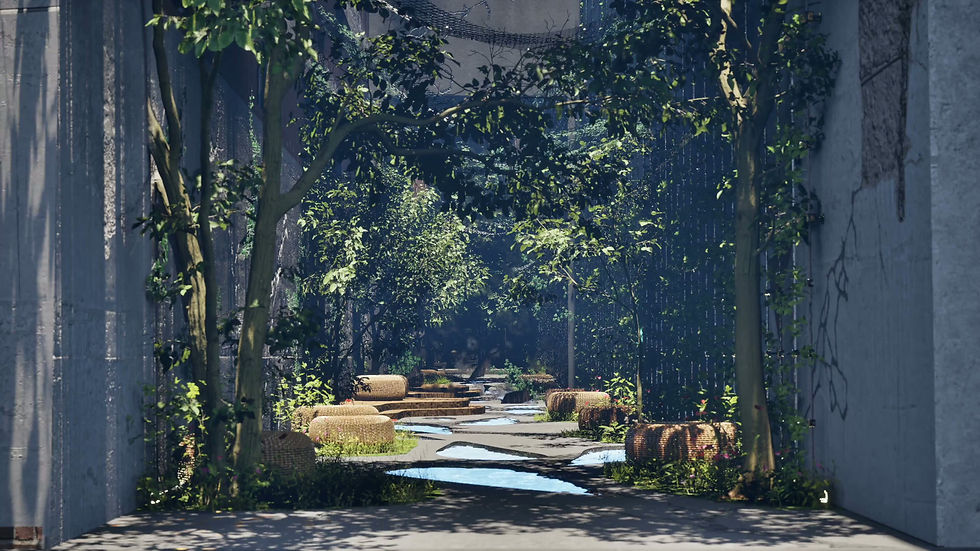
Everdusk
THE PULSE OF WHAT WAS AND WHAT COULD BE
An urban regeneration project that transforms a forgotten alleyway in Downtown Los Angeles into a poetic and sustainable pocket park.
The design invites visitors to experience traces of LA’s erased ecologies: its native flora, vanished rivers, and dimmed constellations through sensory, interactive installations that merge art, technology, and environmental awareness.
By foregrounding transit accessibility and ecological storytelling, Everdusk reimagines how public infrastructure can heal urban disconnection. It shifts from car-centric design to pedestrian-centered belonging, using light, texture, and memory as mediums of renewal.
The Urban Challenge: Reclaiming What Was Lost

Site Plan
Los Angeles is a city of absences paved-over rivers, fragmented habitats, and forgotten night skies.
Its infrastructure prioritizes cars over people, leaving few sanctuaries that connect residents to nature or history.
Beneath this dense fabric lies a deeper narrative of loss: the erasure of Tongva land, the silencing of natural rhythms, and the fading of ecological memory.
Design Response:
A Space to Remember and Reconnect
Everdusk responds to this condition through a transit-first pocket park, a prototype for small-scale urban revival.
It is located at 710 S Grand Avenue, directly linked to public transportation routes, making it a car-free destination for commuters, locals, and visitors alike.

![AXON_[Converted]_[Recovered].png](https://static.wixstatic.com/media/0747df_883fe44357474319a0505ca5fb5e075b~mv2.png/v1/fill/w_431,h_600,al_c,q_85,enc_avif,quality_auto/0747df_883fe44357474319a0505ca5fb5e075b~mv2.png)
![eden_elevation_1_[Converted]_[Recovered].png](https://static.wixstatic.com/media/0747df_57d3a0e8d17f482191eb0b21c6ccabcc~mv2.png/v1/fill/w_135,h_264,al_c,q_85,usm_0.66_1.00_0.01,enc_avif,quality_auto/0747df_57d3a0e8d17f482191eb0b21c6ccabcc~mv2.png)

Site Map
Site Elevation
Back Elevation
Mission Statement:
A poetic and interactive landscape that transforms forgotten infrastructure into spaces of reflection and renewal. Where visitors rediscover their role within the living system of the city.
Vision:
Three intertwined principles:
Ecological Memory —
Reintroducing native plant species and natural elements that once defined DTLA’s landscape.
Collective Belonging —
Creating inclusive public spaces that honor Indigenous narratives and shared stewardship.
Sustainable Adaptation —
Utilizing upcycled materials, passive cooling systems, and solar-powered lighting to minimize environmental impact.
To spark a cultural shift toward pedestrian-centered, environmentally restorative design, proving that even the smallest fragments of the city can foster resilience and belonging.
Axon Drawing
The Lost Flora:
Reintroducing DTLA’s Native Plants
What Happens?
- As visitors walk through the space, they are surrounded by DTLA’s original native plants—species that once thrived here but are now nearly erased.
- Some plants visibly climb and reclaim the industrial walls, showing a slow takeover of man-made structures.
Emotional Impact:
- Visitors feel immersed in a reconstructed past, walking through a version of LA that could have been.
- They begin to question how urbanization has shaped what we think is “normal” in our cities.
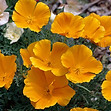
California Poppy
Bright orange flowers with delicate petals.

California Buckwheat
Once a key part of LA’s landscape, crucial for pollinators, but its habitat has been drastically reduced.

Black Sage
Once dominant in LA’s coastal sage scrub ecosystem, now fragmented due to urban sprawl and invasive plant species.

White Sage
Sacred to Indigenous communities, its populations have been severely reduced due to overharvesting, wildfires, and habitat loss.
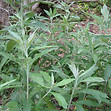
Mugwort
Historically found along riverbanks and marshes, its presence in LA has diminished as rivers were paved over.
Echoes of the Tongva:
Honoring LA’s First People
What Happens?
-Visitors rest on sculptural seating made with the woven technique using recycled bio-materials, honoring the delicate original craft.
- Discreet QR codes provide education on Tongva culture and lost landscapes.
Partnering with the Tongva Taraxat Paxaavxa Conservancy
- The only land conservancy run by the Tongva people, focusing on land stewardship, education, and cultural preservation.
Emotional Impact:
- Visitors achieve a tactile connection to ancient craft, experiencing history through their hands.
- The experience is a subtle but profound discovery of lost knowledge.
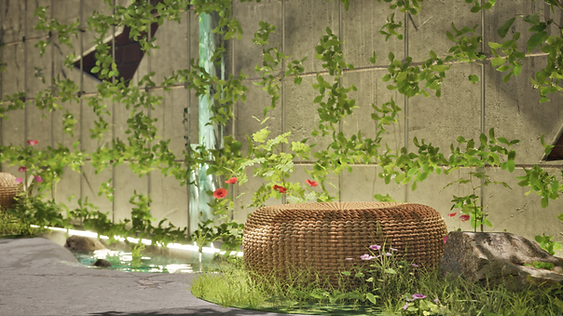
Woven Seating
The Journey Through Everdusk
Everdusk unfolds as a series of atmospheric experiences, each revealing a lost layer of Los Angeles. The progression moves from memory to awakening, blending tactile interaction, sound, and light.

The Lost Flora —
Native plants reclaim the alley’s concrete surfaces.
The Forgotten Surge —
Beneath visitors’ feet, step-activated projections trace the paths of vanished rivers. Light ripples appear and fade, revealing what once flowed through the city’s foundations.


Echoes of the Tongva —
Sculptural seating inspired by Tongva basketry invites rest and reflection.
The Vanishing Constellations —
As dusk falls, embedded lights map constellations that once filled the Los Angeles night. Each step taken causes a star to fade—an intimate metaphor for loss and awareness.


Fragment of Eden —
The journey culminates at a fractured mirror installation. Touch-sensitive sections illuminate gently, symbolizing regrowth and the possibility of renewal. Visitors see themselves reflected within nature’s broken continuity.
Material and Sustainability Strategies:
- Locally sourced stone and wood for structure and ground surfacing.
- Recycled metals and bioplastics formed into woven, sculptural seating.
- Solar-powered lighting to support off-grid illumination.
- Passive cooling through shading vines and misting systems.
- Low-water native plant species to promote biodiversity and reduce irrigation demand.

Everdusk invites a moment of awareness—a pause in the urban current. It asks visitors to remember what was lost, to feel the living pulse beneath the city, and to imagine a future where ecology and humanity coexist.
This is not just a park, it is a memory made visible. A fragment of what was, and a vision of what could be. Nature does not vanish; it waits. The question is, will we choose to remember?